Breed field guide
British Shorthair
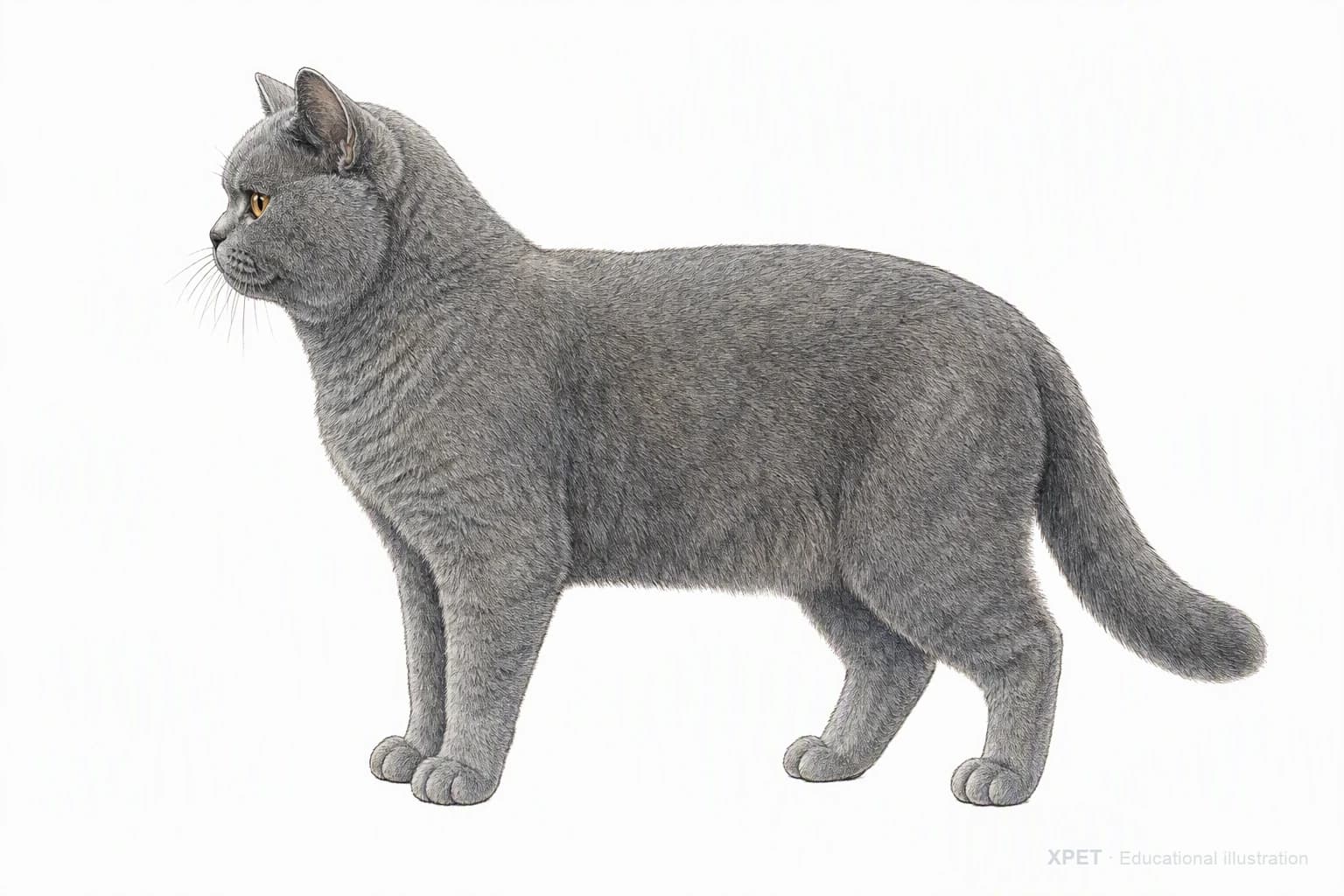
A substantial, broad-chested cat with a round head, full cheeks and a dense plush coat.
Overview & fast facts
- XPET group
- Shorthair
- Size class
- Large
- Coat
- Short, very dense, plush coat
- Origin context
- United Kingdom
- Entry type
- Breed
- Species
- Domestic cat
British Shorthair is included in XPET's Shorthair catalog group. The guide brings its documented appearance and history together with practical care considerations. Registry ideals describe a population; they do not establish what an individual animal needs.
Use population knowledge as context for observations over time. XPET's digital twin is built around the animal's recorded measurements and care history; this educational guide does not create personal health findings or DNA results.
Sources for this section · Editorial review
- British Shorthair (opens in a new tab)Cat Fanciers’ Association
- 2021 AAHA/AAFP Feline Life Stage Guidelines (opens in a new tab)Journal of feline medicine and surgery
Origin & history
The British Shorthair developed from British domestic cats through organized breed selection. Recovery after the world wars included outcrossing, so a simple uninterrupted ancient lineage is not assumed.
Sources for this section · Editorial review
- British Shorthair (opens in a new tab)Cat Fanciers’ Association
Physical traits & coat
A substantial, broad-chested cat with a round head, full cheeks and a dense plush coat. Blue is familiar, but many colors and patterns are recognized.
Coat: Short, very dense, plush coat.
A standard describes a preferred appearance, while healthy individuals vary in frame and body condition. This guide shows numerical measurements only where the cited reference was reviewed for those figures; an omitted range is not a biological limit.
Sources for this section · Editorial review
- British Shorthair (opens in a new tab)Cat Fanciers’ Association
- 2021 AAHA Nutrition and Weight Management Guidelines for Dogs and Cats (opens in a new tab)Journal of the American Animal Hospital Association
Temperament & behavior
Breed descriptions can suggest social tendencies, but a cat's own preferences, early experience and environment are more useful for daily care. Offer choice over contact, respect hiding and resting, and avoid forced introductions.
Notice what helps this individual feel comfortable, how it recovers after excitement and which situations it avoids. Sudden behavioral change deserves attention to pain, illness and environmental change as well as training.
Sources for this section · Editorial review
- British Shorthair (opens in a new tab)Cat Fanciers’ Association
- AAFP and ISFM feline environmental needs guidelines (opens in a new tab)Journal of feline medicine and surgery
- 2021 AAHA/AAFP Feline Life Stage Guidelines (opens in a new tab)Journal of feline medicine and surgery
Play, learning & activity
Provide short interactive play that lets the cat watch, stalk, chase and catch a toy. Offer stable climbing routes, hiding places, scratching surfaces and food-search opportunities. Rotate activities according to interest and mobility.
Several brief opportunities for self-directed movement may suit a cat better than a fixed exercise target. Adapt play to the cat's breathing, balance and recovery. A reduction in jumping, play or grooming can be a meaningful change.
Make choice part of care
Reward approaching a carrier, resting on a familiar mat and accepting brief handling. Keep sessions comfortable enough for the cat to participate willingly. Stable low platforms and easy-access toys can support cats that find climbing difficult.
Sources for this section · Editorial review
- AAFP and ISFM feline environmental needs guidelines (opens in a new tab)Journal of feline medicine and surgery
- 2021 AAHA/AAFP Feline Life Stage Guidelines (opens in a new tab)Journal of feline medicine and surgery
- British Shorthair (opens in a new tab)Cat Fanciers’ Association
Health & preventive care
Use the breed history to frame questions, then choose care from the animal's examination, family history and relevant screening. The considerations below are not a disease checklist or a probability estimate.
An individual preventive plan
Discuss examination frequency, vaccination, parasite prevention, oral health and reproductive care in relation to age, location and lifestyle. Ask which screening results are relevant to the actual pedigree and family history.
Screening has a scope
A DNA panel does not replace an orthopedic examination, eye assessment, cardiac evaluation or other screening when those are indicated. A normal result for one tested condition does not certify overall health.
Notice changes early
Track appetite, thirst, weight, elimination, comfort and normal activity. New difficulty breathing, collapse or inability to pass urine needs prompt veterinary attention rather than interpretation through a breed description.
Sources for this section · Editorial review
- 2021 AAHA/AAFP Feline Life Stage Guidelines (opens in a new tab)Journal of feline medicine and surgery
- British Shorthair (opens in a new tab)Cat Fanciers’ Association
Genetics & population biology
Genetics can help explain population history, visible traits and some inherited conditions. A documented variant, a statistical association and a complex trait answer different questions; none should be converted into a diagnosis from a breed name.
Ancestry and coat are different questions
A breed describes a managed population and its history. Coat color, coat length and body shape are inherited traits, but sharing one visible trait does not establish breed ancestry or a particular health genotype.
What remains unknown
This guide does not provide a complete variant inventory or a validated disease probability for British Shorthair. Evidence from one family, registry or research cohort may not represent every population. An unlisted condition is not evidence that the breed is free of it.
Sources for this section · Editorial review
Grooming & daily care
Grooming starts with the individual coat: short, very dense, plush coat. Adapt handling, tools and frequency to what keeps this animal comfortable. Check nails, ears, skin and oral health alongside the coat.
Gentle routine
Use a soft brush or grooming mitt as tolerated, and check the skin, paws and nails during brief sessions. A short coat can shed and still needs observation for irritation or parasites.
Bathing and products
Base bathing on dirt, skin needs and veterinary advice. Use a product appropriate to the species and avoid applying human skin treatments or essential oils without guidance.
Sources for this section · Editorial review
- British Shorthair (opens in a new tab)Cat Fanciers’ Association
- 2021 AAHA/AAFP Feline Life Stage Guidelines (opens in a new tab)Journal of feline medicine and surgery
Nutrition & feeding
Choose a complete diet appropriate to life stage and medical needs. Portion size depends on the actual food, body condition, activity, growth and response over time. A breed-wide calorie target cannot account for these differences.
Provide fresh water and a calm feeding arrangement. In multi-cat households, separate feeding places can make access and intake easier to observe. Introduce food puzzles gradually and keep track of what each cat actually eats.
Record appetite, food changes and weight trends. If weight, thirst or appetite changes unexpectedly, discuss the cause with a veterinarian before making a substantial restriction or supplement change.
Sources for this section · Editorial review
- 2021 AAHA Nutrition and Weight Management Guidelines for Dogs and Cats (opens in a new tab)Journal of the American Animal Hospital Association
- AAFP and ISFM feline environmental needs guidelines (opens in a new tab)Journal of feline medicine and surgery
Vocalization & communication
Meowing, trilling and other calls depend on context and learned interaction as well as the individual. Record when a change occurs. New night-time calling or persistent vocalization can accompany stress or illness and deserves veterinary attention.
Context makes a record useful: note the time, nearby activity, body language and whether the animal could settle afterward. Persistent distress or a new pattern should lead to an individual assessment.
Sources for this section · Editorial review
- AAFP and ISFM feline environmental needs guidelines (opens in a new tab)Journal of feline medicine and surgery
- 2021 AAHA/AAFP Feline Life Stage Guidelines (opens in a new tab)Journal of feline medicine and surgery
Home & environmental needs
The feline environmental guidelines emphasize safe places, separated resources, opportunities for play and predatory behavior, positive predictable human interaction, and respect for a cat's sense of smell. In a multi-cat home, spread resources so access does not require passing another cat.
Indoor life needs active provision for exploration, scratching, observation and rest. Secure windows and balconies, offer comfortable resting levels and make litter areas easy to reach. A cat should be able to retreat without losing access to food, water or a toilet.
Sources for this section · Editorial review
- AAFP and ISFM feline environmental needs guidelines (opens in a new tab)Journal of feline medicine and surgery
- British Shorthair (opens in a new tab)Cat Fanciers’ Association
Senior care & changing needs
Aging is a changing life stage, not a diagnosis. Review comfort, mobility, sensory changes, cognition, weight and muscle condition with a veterinarian. The useful question is how this individual is functioning compared with its own baseline.
Notice reduced jumping, difficulty entering a litter tray, changed grooming and new night-time calling. Offer easy routes to favorite resting places, accessible litter trays and food and water without competition. Avoid assuming that a quieter cat is simply content to do less.
Keep care plans practical and revisit them as needs change. A familiar routine, comfortable rest and small adjustments can help preserve participation in everyday life.
Sources for this section · Editorial review
- 2023 AAHA Senior Care Guidelines for Dogs and Cats (opens in a new tab)Journal of the American Animal Hospital Association
- 2021 AAFP Feline Senior Care Guidelines (opens in a new tab)J Feline Med Surg
Insurance considerations
Compare the policy wording for the individual animal and your location. Premiums and eligibility vary with age, breed, coverage and other factors; this guide does not assign a price tier or recommend an insurer.
What is included
Check accident and illness cover, hereditary and congenital conditions, dental care, diagnostics, specialist treatment and any optional wellness benefits. Ask the insurer to explain exclusions in writing.
When cover applies
Review waiting periods, the definition of a pre-existing condition, age restrictions and how prior signs or medical records are handled. A policy's definitions matter more than a breed's general reputation.
What you would pay
Compare deductibles, reimbursement rates, annual or condition limits and whether payment is made to you or a clinic. Consider both ongoing premiums and the amount you may need to pay before reimbursement.
Sources for this section · Editorial review
- Pet insurance: coverage, exclusions and reimbursement (opens in a new tab)National Association of Insurance Commissioners
Illustration studies
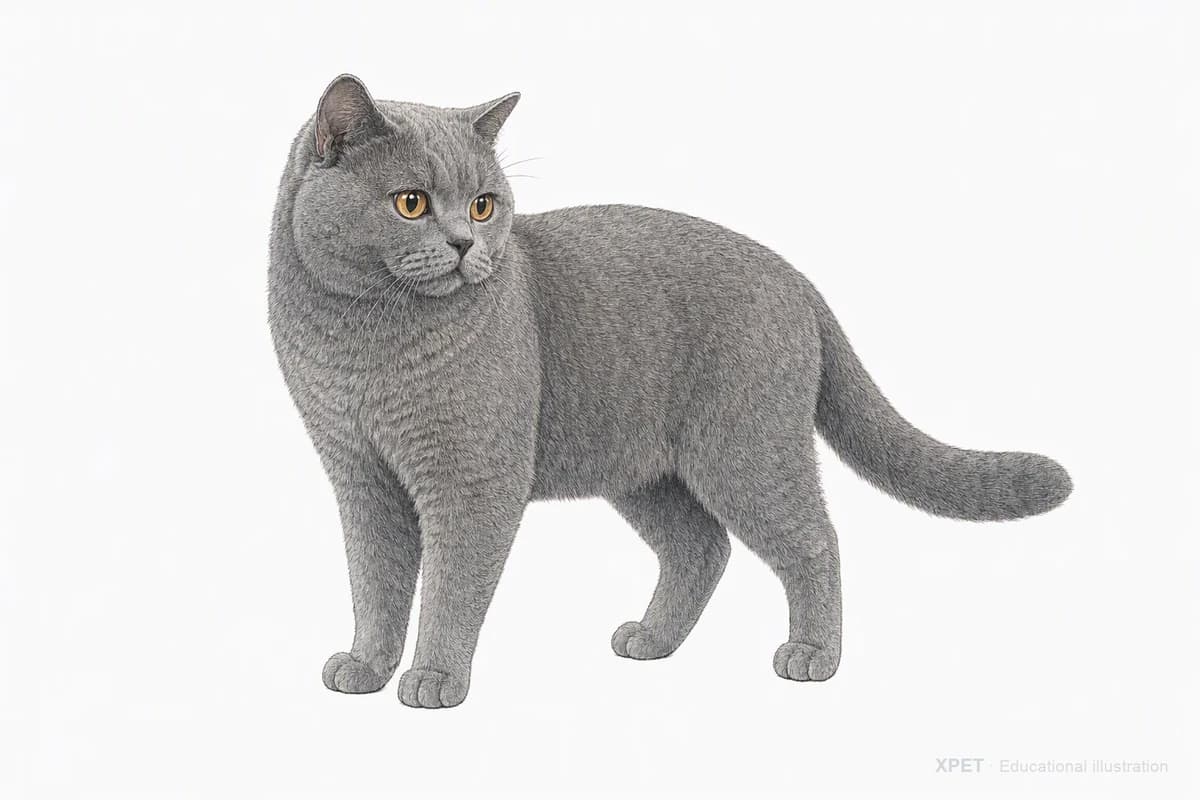
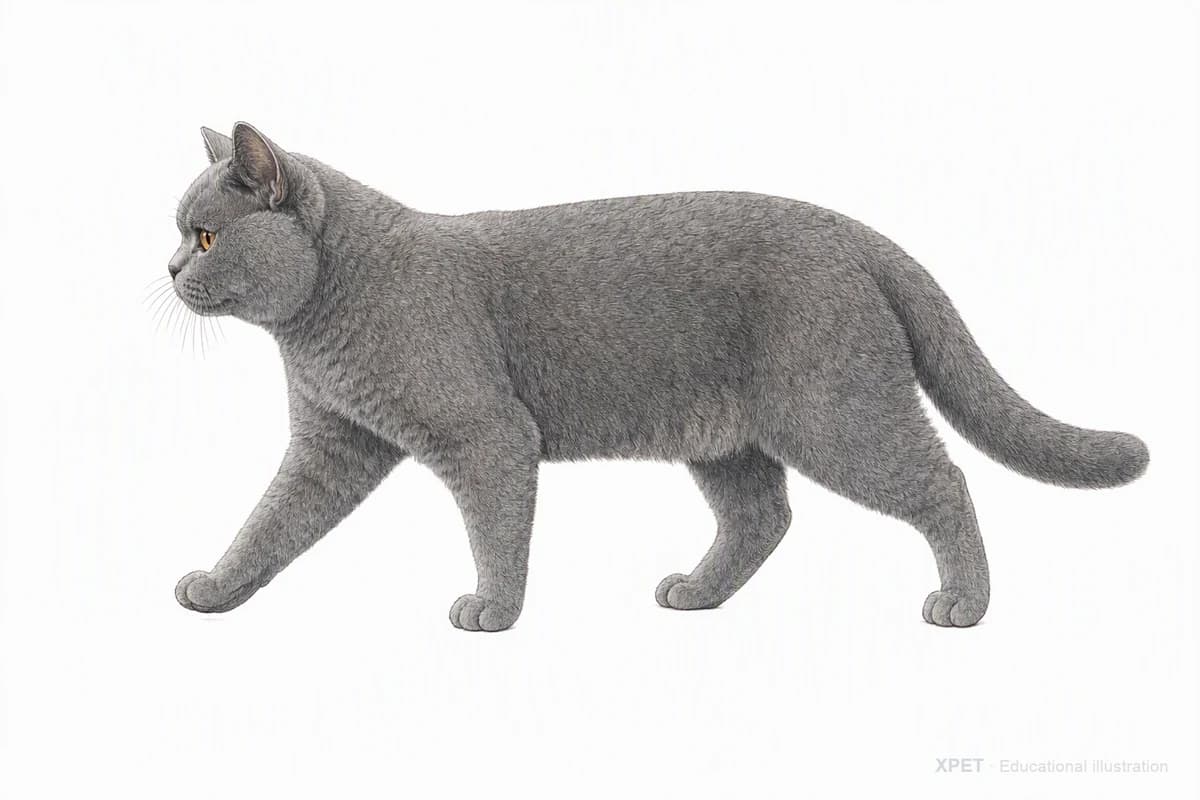
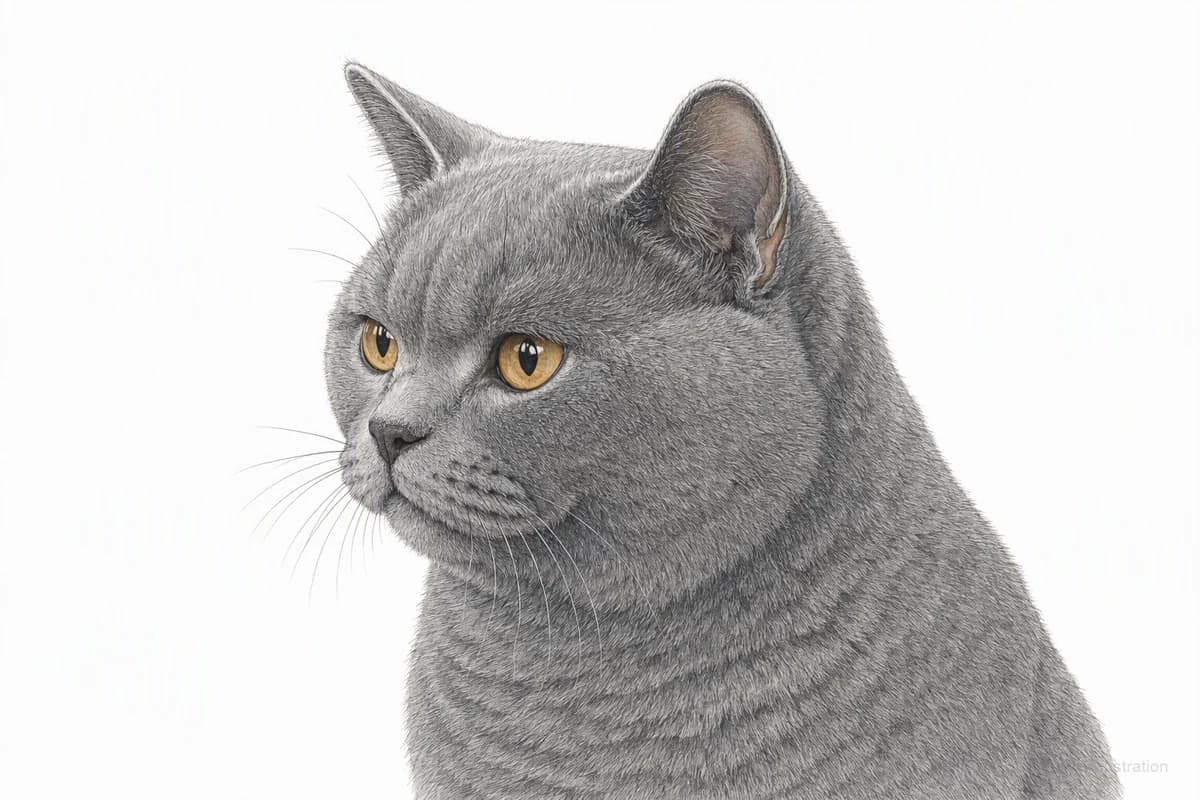
Three original views explore standing form, natural movement and coat detail. These illustrations depict one interpretation of the breed; real animals vary in color, structure and markings.
Scroll horizontally to explore three views. Coat colors and markings vary between individuals.
Sources for this section · Editorial review
- British Shorthair (opens in a new tab)Cat Fanciers’ Association
Field notes & notable facts
British Blue describes a color variety, not every British Shorthair.
Appearance is only part of the record
Registry descriptions help explain the breed's recognizable form. A useful personal record also includes the animal's measurements, preferences, experiences and observed changes over time.
Sources for this section · Editorial review
- British Shorthair (opens in a new tab)Cat Fanciers’ Association
Educational reference · Editorial review . Care choices should reflect your pet’s examination and veterinary advice.