Breed field guide
Chow Chow
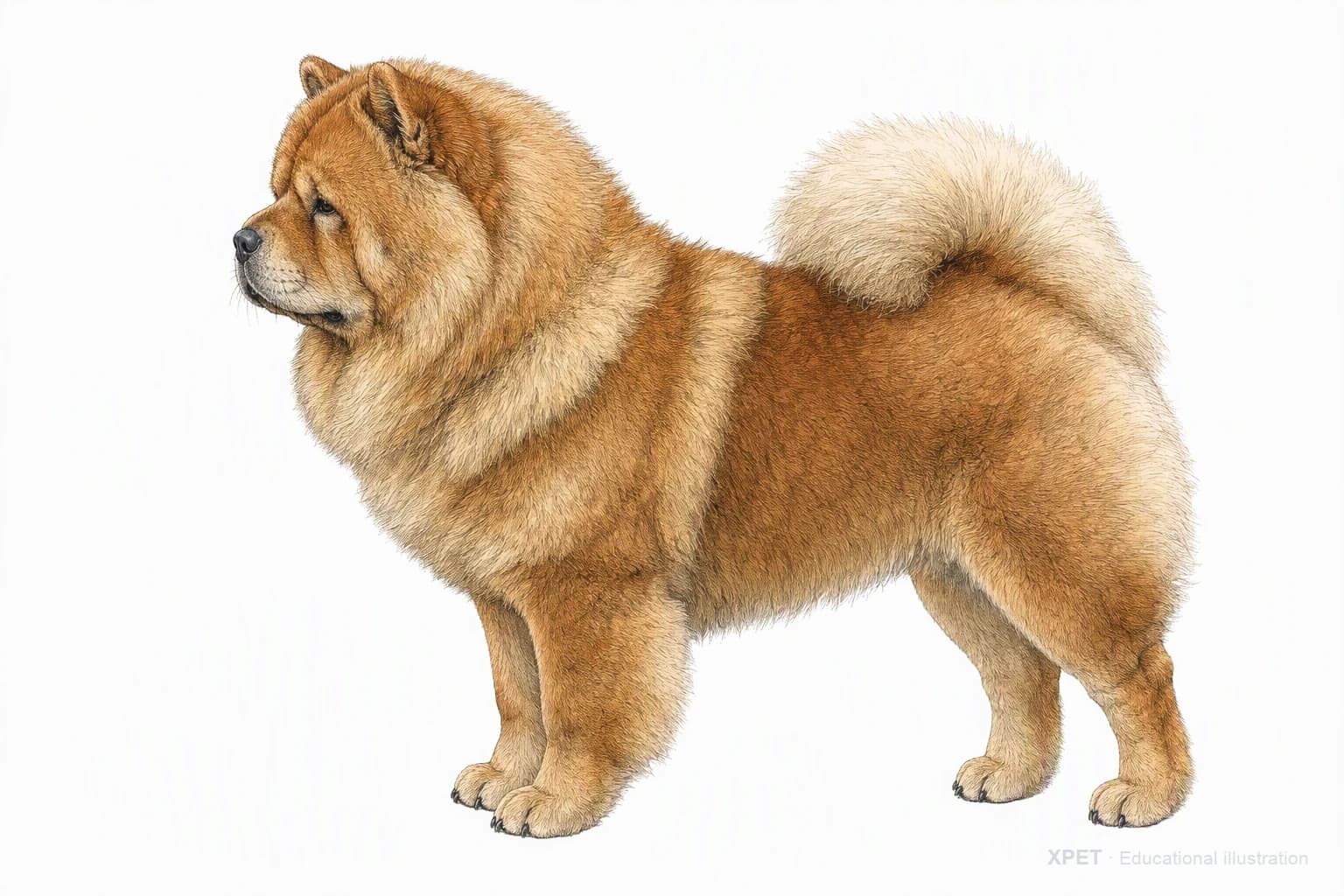
A compact, square dog with a broad head, upright rounded-tipped ears and a high-carried tail.
Overview & fast facts
- XPET group
- Guardian Dog
- Size class
- Medium
- Coat
- Rough or smooth dense double coat
- Origin context
- China
- Entry type
- Breed
- Species
- Domestic dog
Chow Chow is included in XPET's Guardian Dog catalog group. The guide brings its documented appearance and history together with practical care considerations. Registry ideals describe a population; they do not establish what an individual animal needs.
Use population knowledge as context for observations over time. XPET's digital twin is built around the animal's recorded measurements and care history; this educational guide does not create personal health findings or DNA results.
Sources for this section · Editorial review
- Chow Chow (opens in a new tab)United Kennel Club
- 2019 AAHA Canine Life Stage Guidelines (opens in a new tab)Journal of the American Animal Hospital Association
Origin & history
The Chow Chow developed in China and became known abroad through trade and later companion breeding. Its long history should be separated from precise but poorly supported claims about an unchanged ancient lineage.
Sources for this section · Editorial review
- Chow Chow (opens in a new tab)United Kennel Club
Physical traits & coat
A compact, square dog with a broad head, upright rounded-tipped ears and a high-carried tail. Both rough and smooth coats are recognized.
Coat: Rough or smooth dense double coat.
A standard describes a preferred appearance, while healthy individuals vary in frame and body condition. This guide shows numerical measurements only where the cited reference was reviewed for those figures; an omitted range is not a biological limit.
Sources for this section · Editorial review
- Chow Chow (opens in a new tab)United Kennel Club
- 2021 AAHA Nutrition and Weight Management Guidelines for Dogs and Cats (opens in a new tab)Journal of the American Animal Hospital Association
Temperament & behavior
Spitz and regional hunting populations include a wide range of working roles and social styles. An independent response to novelty does not mean that learning is impossible. Use predictable handling and rewards that are meaningful to the individual.
Notice what helps this individual feel comfortable, how it recovers after excitement and which situations it avoids. Sudden behavioral change deserves attention to pain, illness and environmental change as well as training.
Sources for this section · Editorial review
- Chow Chow (opens in a new tab)United Kennel Club
- Ancestry-inclusive dog genomics challenges popular breed stereotypes (opens in a new tab)Science (New York, N.Y.)
- 2019 AAHA Canine Life Stage Guidelines (opens in a new tab)Journal of the American Animal Hospital Association
Training, enrichment & activity
Offer scent searches, exploratory walks, recall games in secure areas and cooperative grooming. Build a history of rewarding check-ins before adding distractions. Introduce handling of feet, coat and harness equipment gradually.
Match walking and play to age and fitness, with pauses in warm weather. A dense coat requires attention to heat and drying; it does not make a dog immune to cold or suitable for every climate.
Reward useful behavior
Use clear cues, achievable steps and rewards. Research comparing training approaches raises welfare concerns about aversive methods. If a dog is fearful or overwhelmed, lower the difficulty and seek appropriate support rather than escalating pressure.
Sources for this section · Editorial review
- Does training method matter? Evidence for the negative impact of aversive-based methods on companion dog welfare (opens in a new tab)PloS one
- 2019 AAHA Canine Life Stage Guidelines (opens in a new tab)Journal of the American Animal Hospital Association
- Chow Chow (opens in a new tab)United Kennel Club
Health & preventive care
Use the breed history to frame questions, then choose care from the animal's examination, family history and relevant screening. The considerations below are not a disease checklist or a probability estimate.
An individual preventive plan
Discuss examination frequency, vaccination, parasite prevention, oral health and reproductive care in relation to age, location and lifestyle. Ask which screening results are relevant to the actual pedigree and family history.
Screening has a scope
A DNA panel does not replace an orthopedic examination, eye assessment, cardiac evaluation or other screening when those are indicated. A normal result for one tested condition does not certify overall health.
Notice changes early
Track appetite, thirst, weight, elimination, comfort and normal activity. New difficulty breathing, collapse or inability to pass urine needs prompt veterinary attention rather than interpretation through a breed description.
Sources for this section · Editorial review
- 2019 AAHA Canine Life Stage Guidelines (opens in a new tab)Journal of the American Animal Hospital Association
- Chow Chow (opens in a new tab)United Kennel Club
Genetics & population biology
Genetics can help explain population history, visible traits and some inherited conditions. A documented variant, a statistical association and a complex trait answer different questions; none should be converted into a diagnosis from a breed name.
Behavior has many influences
Large studies find genetic contributions to behavior alongside substantial variation within breeds. A breed label cannot reliably predict an individual dog's sociability, trainability or response to a particular situation.
Coat biology
Canine research links variants in RSPO2, FGF5 and KRT71 with furnishings, coat length and curl. Visible coat type can suggest a phenotype, but it does not establish which variants this dog carries or replace a DNA result.
What remains unknown
This guide does not provide a complete variant inventory or a validated disease probability for Chow Chow. Evidence from one family, registry or research cohort may not represent every population. An unlisted condition is not evidence that the breed is free of it.
Sources for this section · Editorial review
- Genomic Analyses Reveal the Influence of Geographic Origin, Migration, and Hybridization on Modern Dog Breed Development (opens in a new tab)Cell reports
- Ancestry-inclusive dog genomics challenges popular breed stereotypes (opens in a new tab)Science (New York, N.Y.)
- Coat variation in the domestic dog is governed by variants in three genes (opens in a new tab)Science (New York, N.Y.)
Grooming & daily care
Grooming starts with the individual coat: rough or smooth dense double coat. Adapt handling, tools and frequency to what keeps this animal comfortable. Check nails, ears, skin and oral health alongside the coat.
Work through the coat
Part the coat and gently remove loose undercoat without pulling at the skin. Check friction areas and the skin beneath a dense ruff or trousers; surface brushing alone can miss tangles.
Dry thoroughly
After getting wet, ensure the skin and undercoat can dry comfortably. Discuss substantial clipping with a professional when matting or a medical need makes ordinary maintenance difficult.
Sources for this section · Editorial review
- Chow Chow (opens in a new tab)United Kennel Club
- 2019 AAHA Canine Life Stage Guidelines (opens in a new tab)Journal of the American Animal Hospital Association
Nutrition & feeding
Choose a complete diet appropriate to life stage and medical needs. Portion size depends on the actual food, body condition, activity, growth and response over time. A breed-wide calorie target cannot account for these differences.
Use measured portions and include treats in the feeding plan. During growth, ask about a diet suitable for expected adult size. Change the plan using serial weight, body-condition and muscle assessments rather than trying to reach a show-standard weight.
Record appetite, food changes and weight trends. If weight, thirst or appetite changes unexpectedly, discuss the cause with a veterinarian before making a substantial restriction or supplement change.
Sources for this section · Editorial review
- 2021 AAHA Nutrition and Weight Management Guidelines for Dogs and Cats (opens in a new tab)Journal of the American Animal Hospital Association
Vocalization & communication
Barking, whining and other calls may occur during alerting, play or separation. The meaning depends on context. A changed voice or unusual distress should prompt attention to health and environment.
Context makes a record useful: note the time, nearby activity, body language and whether the animal could settle afterward. Persistent distress or a new pattern should lead to an individual assessment.
Sources for this section · Editorial review
- Ancestry-inclusive dog genomics challenges popular breed stereotypes (opens in a new tab)Science (New York, N.Y.)
- 2019 AAHA Canine Life Stage Guidelines (opens in a new tab)Journal of the American Animal Hospital Association
Home & environmental needs
Plan secure gates and fencing, a comfortable indoor resting area and a cool retreat when needed. Observe the dog around unfamiliar animals rather than inferring compatibility from a breed label.
Plan the home around comfortable access to rest, water and outdoor toileting. Introduce changes gradually and supervise interactions with children or unfamiliar animals. Suitable housing depends on the individual and daily routine, not a simple apartment-friendly score.
Sources for this section · Editorial review
- 2019 AAHA Canine Life Stage Guidelines (opens in a new tab)Journal of the American Animal Hospital Association
- Chow Chow (opens in a new tab)United Kennel Club
Senior care & changing needs
Aging is a changing life stage, not a diagnosis. Review comfort, mobility, sensory changes, cognition, weight and muscle condition with a veterinarian. The useful question is how this individual is functioning compared with its own baseline.
Notice changes in rising, stairs, pace, sleep and interest in familiar activities. Adapt footing, access and exercise while retaining enjoyable movement and interaction. New confusion or withdrawal should be assessed rather than attributed to age alone.
Keep care plans practical and revisit them as needs change. A familiar routine, comfortable rest and small adjustments can help preserve participation in everyday life.
Sources for this section · Editorial review
- 2023 AAHA Senior Care Guidelines for Dogs and Cats (opens in a new tab)Journal of the American Animal Hospital Association
- 2019 AAHA Canine Life Stage Guidelines (opens in a new tab)Journal of the American Animal Hospital Association
Insurance considerations
Compare the policy wording for the individual animal and your location. Premiums and eligibility vary with age, breed, coverage and other factors; this guide does not assign a price tier or recommend an insurer.
What is included
Check accident and illness cover, hereditary and congenital conditions, dental care, diagnostics, specialist treatment and any optional wellness benefits. Ask the insurer to explain exclusions in writing.
When cover applies
Review waiting periods, the definition of a pre-existing condition, age restrictions and how prior signs or medical records are handled. A policy's definitions matter more than a breed's general reputation.
What you would pay
Compare deductibles, reimbursement rates, annual or condition limits and whether payment is made to you or a clinic. Consider both ongoing premiums and the amount you may need to pay before reimbursement.
Sources for this section · Editorial review
- Pet insurance: coverage, exclusions and reimbursement (opens in a new tab)National Association of Insurance Commissioners
Illustration studies
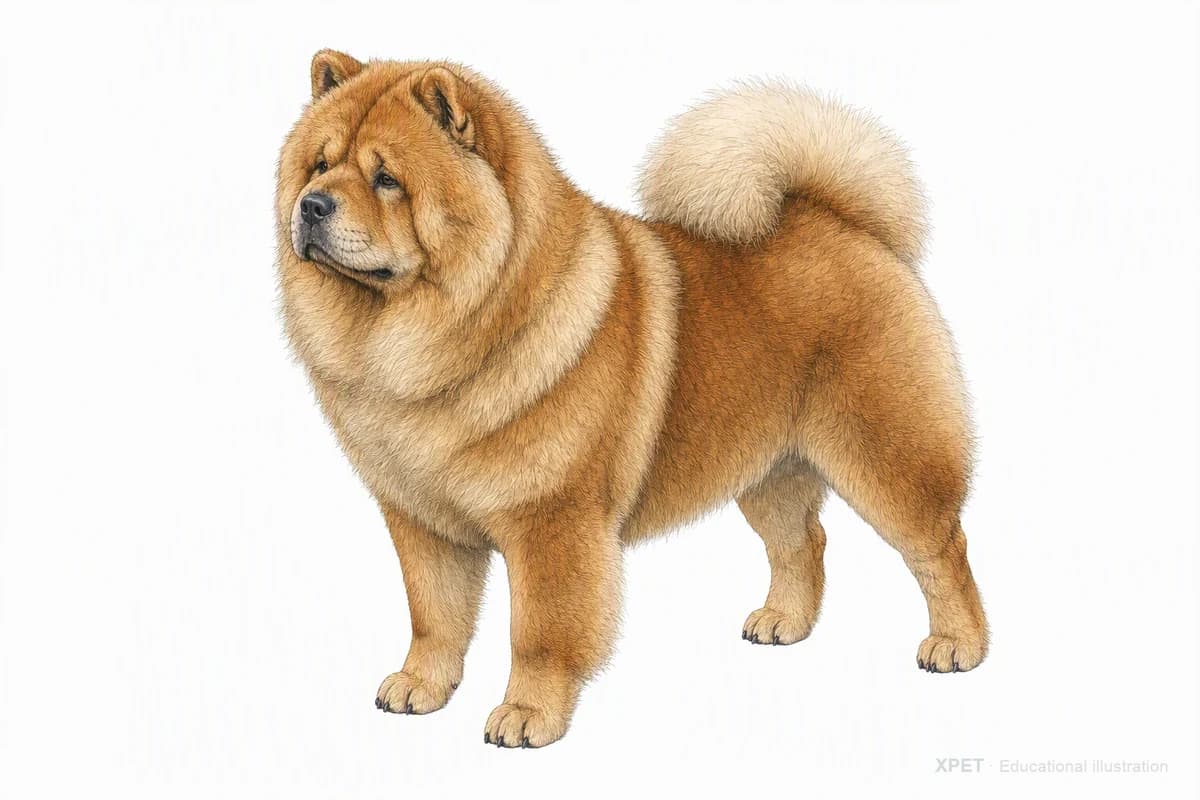
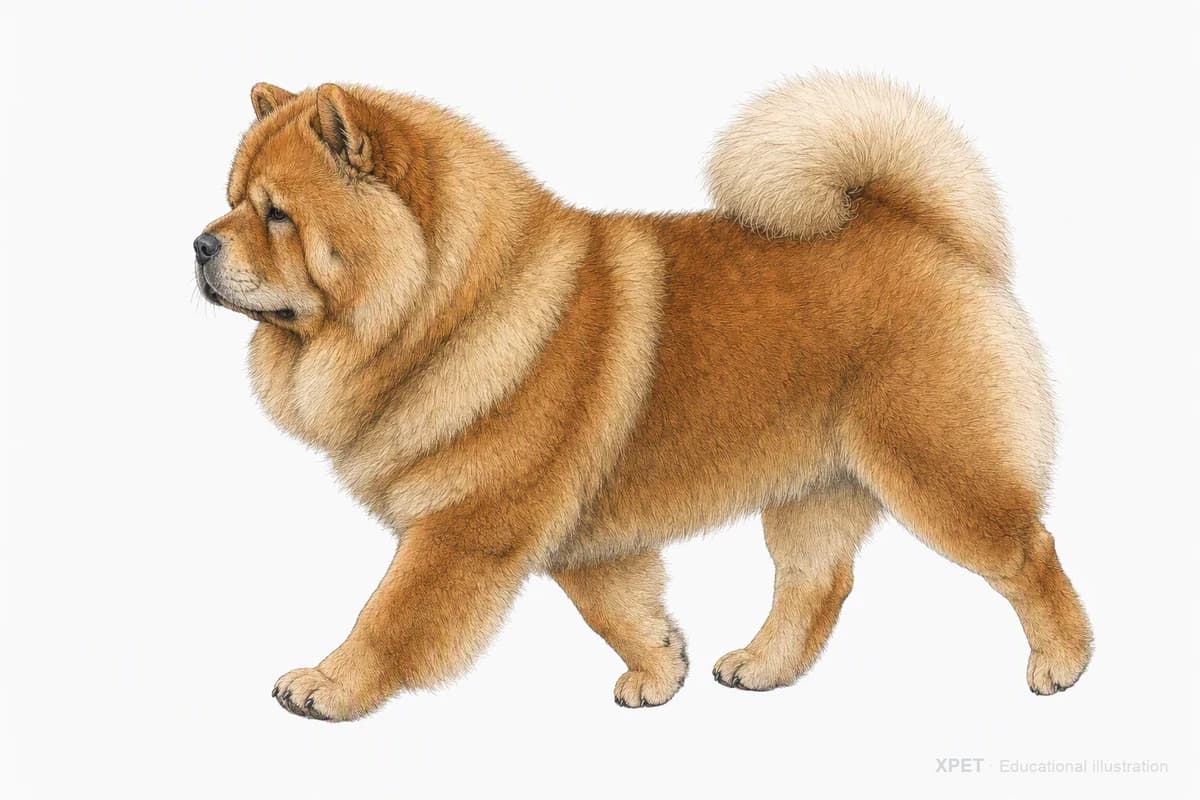
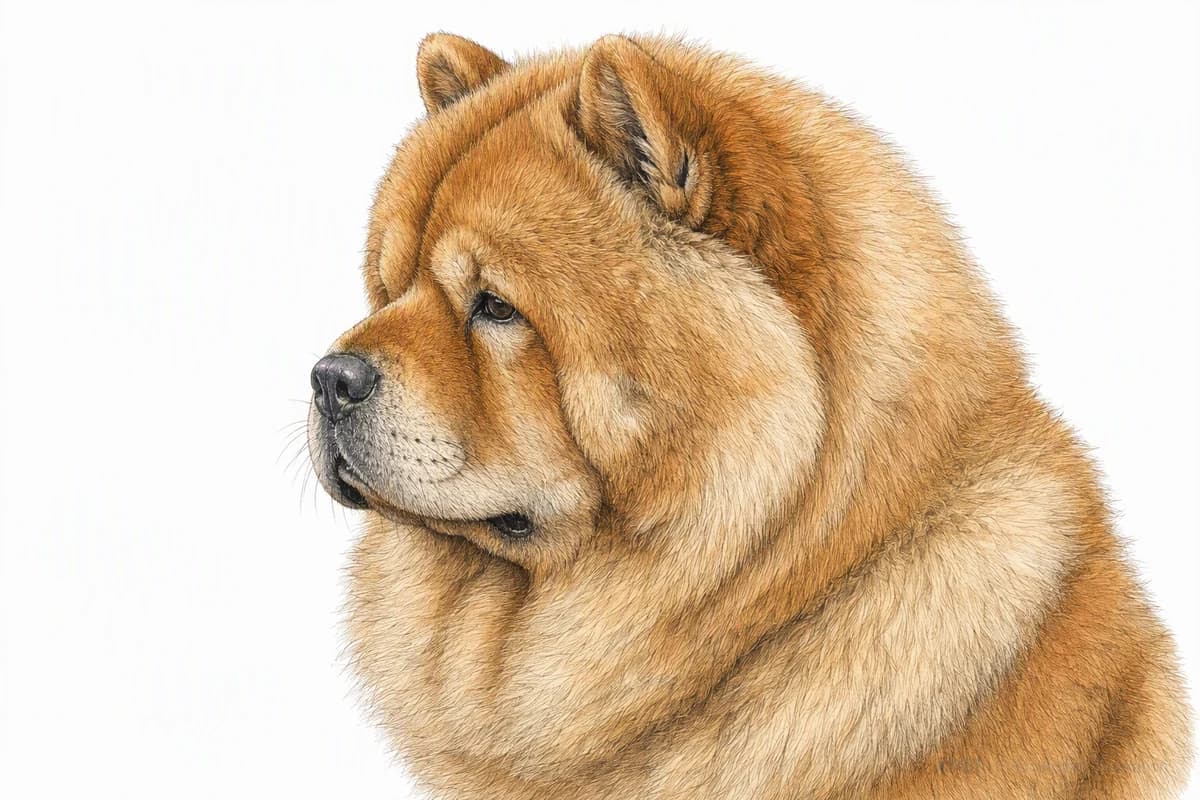
Three original views explore standing form, natural movement and coat detail. These illustrations depict one interpretation of the breed; real animals vary in color, structure and markings.
Scroll horizontally to explore three views. Coat colors and markings vary between individuals.
Sources for this section · Editorial review
- Chow Chow (opens in a new tab)United Kennel Club
Field notes & notable facts
A rough coat is not required: smooth-coated Chow Chows share the same breed identity.
Appearance is only part of the record
Registry descriptions help explain the breed's recognizable form. A useful personal record also includes the animal's measurements, preferences, experiences and observed changes over time.
Sources for this section · Editorial review
- Chow Chow (opens in a new tab)United Kennel Club
Educational reference · Editorial review . Care choices should reflect your pet’s examination and veterinary advice.