A Silent Epidemic
Understanding metabolic risk
In biology, a visible symptom is never the beginning.
It is the end-stage event of a long, unseen process.
The Data
A System at Scale
For decades, modern pet care has focused on treating disease only after it surfaces, overlooking the metabolic systems that quietly govern health every day. The result is a silent epidemic hiding in plain sight.
More than 90.5 million American households share their lives with dogs and cats. Yet the prevailing standard of care still relies on generalized, reactive guidance designed for populations, not individuals.
The result is a nationwide metabolic crisis.
Obesity is not the disease.
It is the earliest visible signal of metabolic imbalance, one that accelerates chronic illness, drives systemic inflammation, and shortens the healthy years we share with our pets.
Canine Obesity
are now clinically overweight or obese.
Source: Association for Pet Obesity Prevention (APOP), 2023
Feline Obesity
are now clinically overweight or obese.
Source: Association for Pet Obesity Prevention (APOP), 2023
Dogs and cats carrying excess weight are more likely to develop:
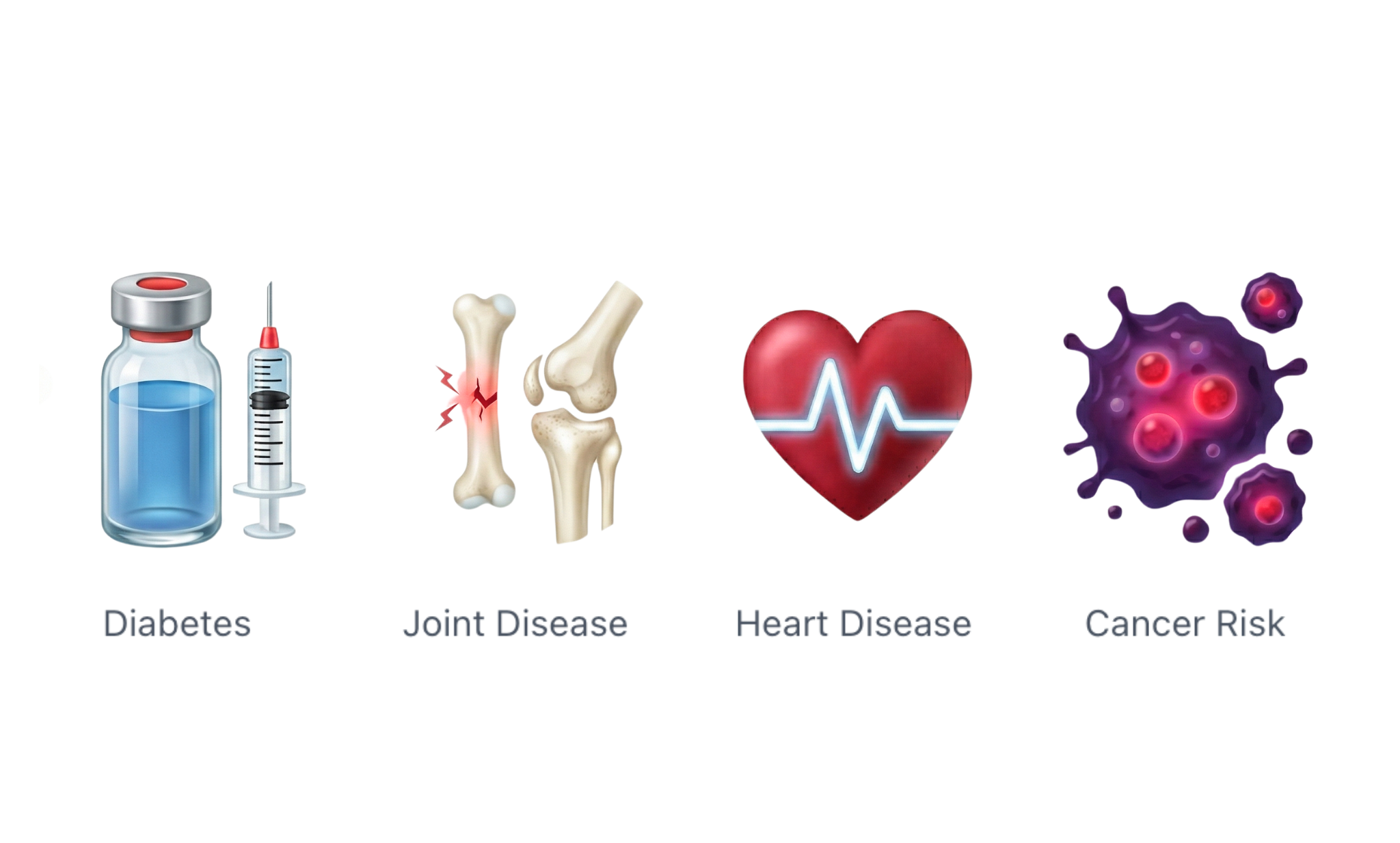
Excess body fat affects more than weight.
It dramatically increases the risk of chronic disease, shortens lifespan, and sets the stage for serious outcomes, including cancer.
Cancer in Dogs
All Dogs
Lifetime risk
will develop cancer
Dogs 10+ Years
Senior dogs
will develop cancer
American Veterinary Medical Association
Cancer rates have surged within a single generation.
How the Crisis Unfolds
The Mismatch
Generic feeding charts and "breed-based" recommendations ignore the genomic, metabolic, and lifestyle divergence unique to each pet.
The Accumulation
A slow, cumulative metabolic strain builds day after day, undetectable to the eye, but measurable in biology.
The Result
By the time weight gain becomes visible, internal damage to joints, cardiovascular systems, and metabolic pathways has already begun.
The Reactive Tax
Why changes deserve attention
Reactive care carries both financial and emotional consequences. Most interventions occur only after a crisis, when options are limited and outcomes uncertain. We call this compounding burden the Reactive Spiral.
Service
Typical Emergency Cost
XPET™ Strategy
Emergency Vet Exam
$150–$250
Continuous sub-clinical monitoring
Bloodwork & Imaging
$200–$900
Detecting biological drift early
Hospitalization
$2,000–$3,000
Maintaining metabolic baseline
Emergency Surgery
$5,000+
Lifetime peak health maintenance
Why "Averages" Fail
The Metabolic Cascade
Modern care relies on population-based standards. But metabolism is personal. Every pet's energy balance is shaped by genetics, environment, age, activity, and nutrition. When care ignores this individuality, imbalance becomes inevitable.
Individual Biology Ignored
Genetics and lifestyle are flattened into averages.
Energy Balance Falters
Small daily mismatches create a "Biological Drift."
Metabolic Decline
Energy processing slows, and systemic inflammation begins.
The Inflection Point
Weight rises, and the system moves into chronic pathology.
The Metabolic Cascade
Individual Biology
Genetics • Environment • Lifestyle
Energy Mismatch
Daily Caloric Surplus
Metabolic Strain
Inflammation • Fat Accumulation
Chronic Disease
Visible Symptoms
Understanding the Connection
How Obesity Fuels Cancer
This comprehensive overview explains the biological mechanisms linking metabolic imbalance to cancer development.
The Intervention
We have both the responsibility
and the tools to intervene earlier.
XPET™ exists to break the cycle of reactive care. By building an N-of-1 Digital Twin, we detect metabolic shifts while they are still sub-clinical, restoring balance before disease takes hold.
Before weight becomes disease.
Before disease takes its toll.
Before the bond is cut short.
Change the Trajectory
Build a history worth reviewing.
Protect their future today.
Precision for them. Peace of mind for you.